Early retirement: the 5 most costly mistakes
Retiring early is a dream for many… until you realize that “earlier” also means “longer.” Here’s how to avoid that pitfall.
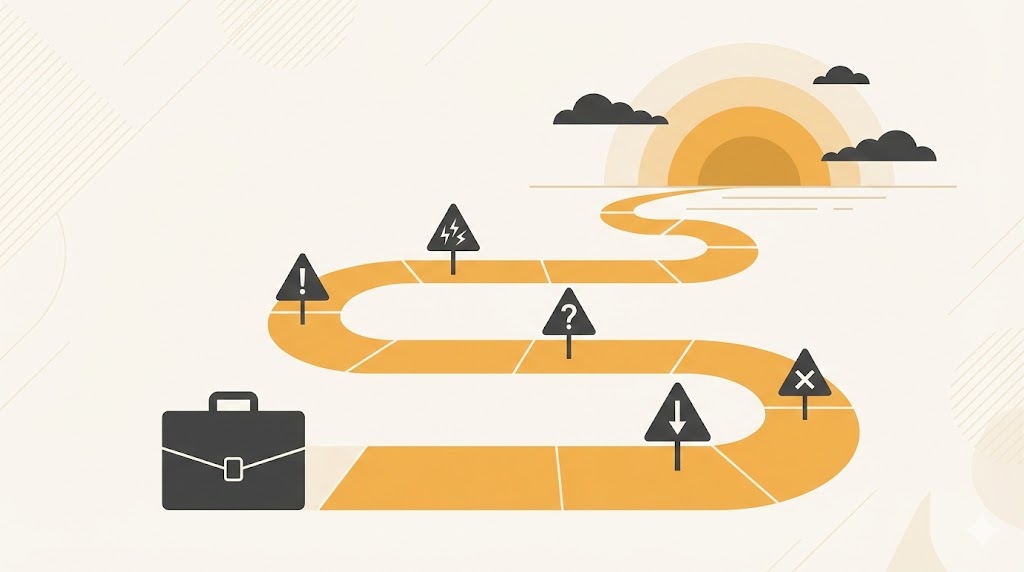
Retiring early is a dream for many… until you realize that “earlier” also means “longer.” Here’s how to avoid that pitfall.
In a region like the Outaouais, where many commute between Quebec, Ontario, and the federal public service, decisions are sometimes even more sensitive because Retirement income comes from several sources and do not always synchronize perfectly.
Here are 5 common mistakes, and more importantly, how to avoid them without getting lost in the technical details.
Many people start with a simple idea: "I'm going to collect my pensions as soon as I can." The problem is that The moment you start the QPP/CPP and the OAS (OAS) changes the amount you will receive… for life.
At the federal level, starting the Canada Pension Plan (CPP) before age 65 reduces the amount, while waiting until after age 65 increases it, up to age 70. Old Age Security (OAS) benefits can be delayed until after age 65 to increase the payment. In Quebec, age also has a major impact on the pension, and it is possible to defer it until the age at which it reaches its maximum.
Before choosing a "default" date, ask yourself a simple question: How will I live between my retirement and the start of my pension payments? The right choice often depends on your financial bridge — savings, investments, part-time work.
In early retirement, the classic pitfall is to withdraw funds "as needed" without a strategy. The result: Some years become very taxed. (large withdrawals, severance payments, pension fund payments), then other years are leaner.
Plan withdrawals in blocks (for example, every 3 to 5 years), and consider the order of sources (non-registered investments, TFSA, RRSP/RRIF, annuities). And if you are in a relationship, don't forget that pension income splitting can reduce household taxes — but the rules vary between Quebec and the federal government.
Yes, some expenses are decreasing (transportation, lunches, work clothes). But others are rising quickly: leisure activities, renovations, pending projects, childcare, health, insurance.
Create a realistic retirement budget in two phases:
Beginning of retirement — Often more expensive, because we "profit".
Later — Sometimes more stable, sometimes more expensive (health, support).
When you retire before the age of 65, you often lose some of your protections: drug insurance, disability insurance, dental care insurance, life insurance, etc. For employees of the federal government or large organizations, this is a common blind spot: they calculate the pension, but they forget the benefits.
Before giving your departure date, Make a list of what was "invisible". on your budget because the employer paid part of it. Then, assess what you are keeping, what you are replacing, and what you are willing to forgo covering.
The most costly risk in early retirement isn't just "the stock market falling." It's... having to sell at the wrong time to finance daily life, especially in the early years.
Having a planned cash reserve (often 12 to 24 months of expenses), and a simple strategy: What to sell when markets are doing well, what to use when they are doing badly. It prevents you from improvising under pressure.
Early retirement is often possible… but it works much better when it is decided like a management, not like a date.
There is no mandatory "official" retirement age. The Quebec Pension Plan (QPP) can be claimed as early as age 60 (with a reduction), and the Pension Plan (PPP) can also be claimed as early as age 60. Old Age Security (OAS) benefits begin at age 65 by default, but can be deferred until age 70. Technically, you can retire at any age if your financial situation allows.
It depends entirely on your lifestyle, your sources of income (pension, annuities, investments), and your life expectancy. A general rule is to aim for a replacement income of 70% to 80% of your pre-retirement income. An advisor can help you calculate your exact figure with a personalized projection.
The optimal order of withdrawals varies depending on your tax rate, other sources of income, and long-term strategy. Often, it's advantageous to withdraw from your RRSP during years of lower income (between retirement and the start of your pension), while preserving your TFSA as a tax-free reserve. Planning in 3- to 5-year blocks helps minimize your overall tax bill.
In most cases, yes—at least partially. Benefits like drug, dental, and disability insurance are often tied to employment. Some plans offer transitional coverage or the option to convert to an individual policy, but at a higher cost. It's essential to check what you'll keep and what you'll need to replace before setting your departure date.
Deferring your pension permanently increases the monthly amount—approximately 0,6% per month of deferral after age 65 for the CPP, and up to 42% more if you wait until age 70. The decision depends on your health, other income, and immediate need for cash. An advisor can model both scenarios to see which is more advantageous for you over 20, 25, or 30 years.
Our advisors are here to build a retirement plan tailored to your situation, whether you are just starting to think about it or ready to take action.
Contact us