The RRSP trap: What if you could do better with a TFSA?
RRSP or TFSA: which is the better choice for your savings? Discover the differences, the tax traps and how to choose based on your income and your goals.
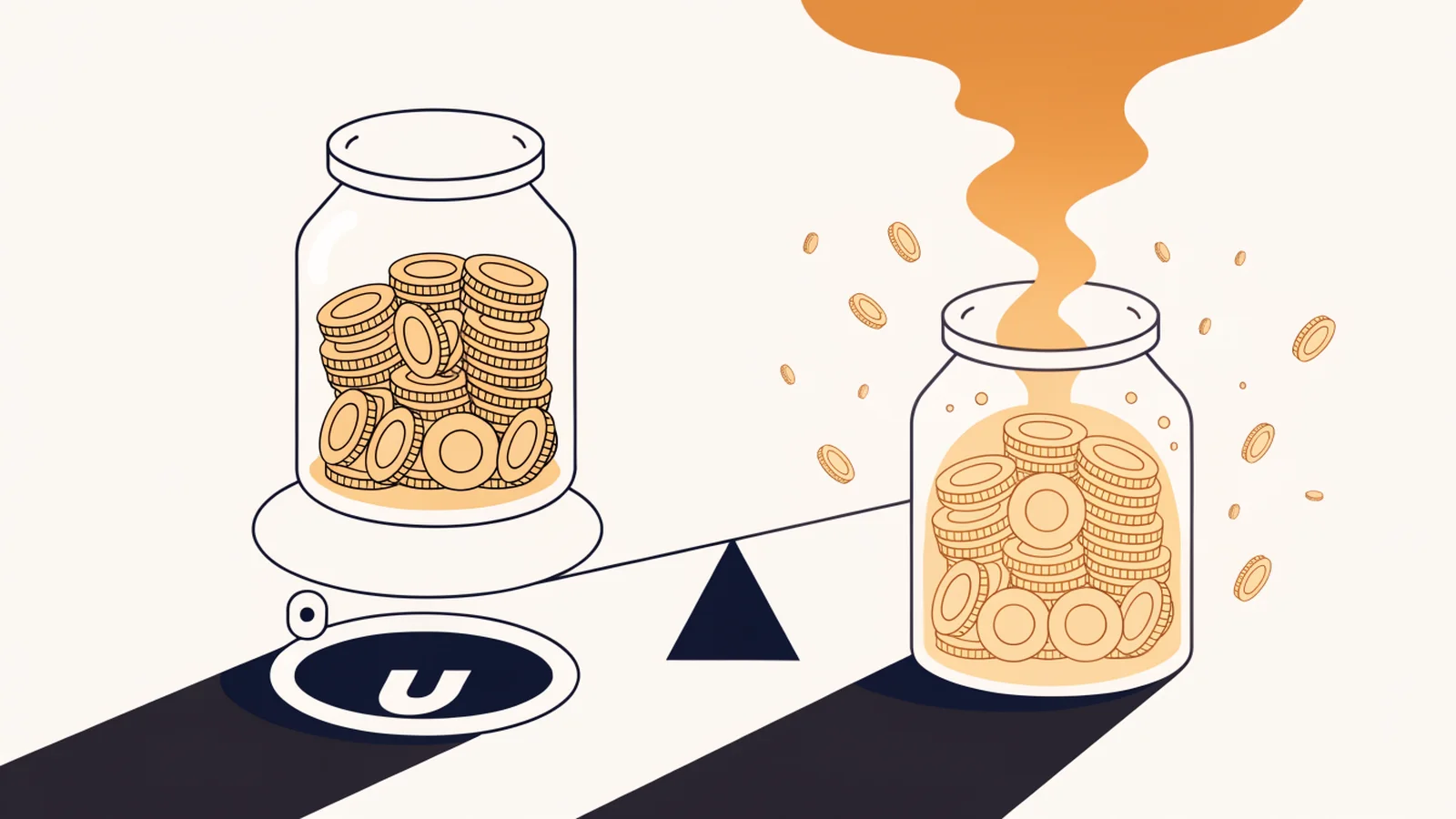
One of the most frequent questions we receive is: “Should I contribute to an RRSP or a TFSA to save more?”Each option offers different tax advantages, but the choice between the two depends on several factors. In this article, we'll explore the differences between an RRSP and a TFSA, as well as the short-, medium-, and long-term impacts of this decision. We'll also illustrate with concrete examples to help you make the best choice for your situation.
Key Differences Between an RRSP and a TFSA
RRSP (Registered Retirement Savings Plan)
- Immediate benefits RRSP contributions are deductible of taxable income, which allows you to reduce the tax you have to pay when contributing.
- Taxation on withdrawals : The withdrawals are mandatory. like income, at the marginal tax rate applicable at the time of withdrawal. This can be an advantage if you are in a lower tax bracket in retirement.
- Main goal The RRSP is designed for retirement savings, and money withdrawn before the age of 71 is subject to tax as income for the year. There is no "penalty" per se, but it's important to understand that these funds will be taxed, which can result in a significant tax bill if the withdrawals are substantial. Premature withdrawal could therefore impact your finances, especially if you are in a high tax bracket.
TFSA (Tax-Free Savings Account)
- Immediate benefits Contributions to the TFSA are not deductible taxable income, but income generated within the TFSA (interest, dividends, capital gains) are tax-exempt.
- Taxation on withdrawals No tax is levied on withdrawals. The TFSA therefore offers a great flexibilitybecause the funds can be withdrawn and reused tax-free, regardless of retirement income.
- Flexibility Unlike an RRSP, funds can be withdrawn at any time without being taxed, which offers more flexibility for short and medium-term projects.
Criteria to Consider When Choosing Between an RRSP and a TFSA
- Your current income If you are in a higher tax bracket now, an RRSP allows you to benefit from an immediate tax reduction. Conversely, if you have a lower income, a TFSA might be more advantageous in the long term.
- Your future income and retirement If you anticipate that your retirement income will be weakerAn RRSP might be more advantageous, as you'll pay less tax on withdrawals. If you anticipate higher income raised to retirementA TFSA might be a better option.
- Flexibility of withdrawals If you plan to need the money before retirement (for a home purchase or another project), a TFSA offers more flexibility. If you want to save specifically for retirement, an RRSP might be more suitable.
Basic Rule for Choosing Between RRSP and TFSA
If your income is higher during your working life (accumulation phase) than during retirement (including government benefits and pension funds), an RRSP could be advantageous. However, if your retirement income is higher, a TFSA will likely be a better option.
Explanation
- Accumulation phase (Active career) During your career, you are often in a higher tax bracket. An RRSP allows you to reduce your taxable income and pay less tax at that time.
- Decumulation phase (Retirement) When you retire, your income may decrease, but if you have significant sources of retirement income (such as a pension or investment income), you might be in a higher tax bracket. In this case, an RRSP might not be as advantageous, as you would have to pay more tax on withdrawals.
Short, Medium and Long Term Impacts
- Short term :
- RRSP Immediate reduction of tax payable, but withdrawals will be taxed later.
- TFSA No immediate tax advantage, but growth is tax-free.
- Middle term :
- RRSP Contributions are advantageous in the short term, but future withdrawals will be subject to tax.
- TFSA : If you need to withdraw funds before retirement, there is no tax.
- Long term :
- RRSP The immediate tax advantage is offset by tax on withdrawals, especially if the tax rate is higher in retirement.
- TFSA : No tax to pay on growth or long-term withdrawals, making it a more advantageous option if you want to maximize your savings.
Illustrative Examples
Example 1: Federal Government employee with a Pension Fund
- Current income $10,000 per year
- RRSP Contribution $10,000 per year
- Current tax rate : 30%
- Expected retirement tax rate : 25%
- Short term impact The person saves $3,500 in immediate tax (30% of $10,000).
- Long term impact Upon withdrawal, the $5,000 and the growth will be taxed at 25%, meaning she will pay $1,250 in tax on that $5,000.
- Retirement Planning His pension fund could cover part of his needs, but the savings made with the RRSP and lower taxation in retirement are advantageous.
Example 2: Entrepreneur with Irregular Income
- Current income $10,000 per year
- RRSP Contribution $10,000 per year
- Current tax rate : 35%
- Expected retirement tax rate : 25%
- Short term impact The person saves $3,500 in immediate tax (35% of $10,000).
- Long term impact : When making withdrawals, the person could find themselves in a lower tax bracket (25%), which is advantageous.
- Retirement Planning If the entrepreneur anticipates lower retirement income, an RRSP may be a good option. However, if the entrepreneur has plans for expansion or investment in retirement, a TFSA may offer more flexibility.
Projecting Long-Term Effects: RRSP vs. TFSA
Let's say someone contributes $10,000 per year for 30 years, earning a 5% annual return. By retirement, this person will have accumulated approximately $500,000 in their RRSP or TFSA.
- RRSP When making withdrawals, the amount will be subject to tax (e.g., 25%). If a person withdraws $10,000, they will have to pay $2,500 in tax, leaving a net amount of $7,500.
- TFSA No tax is applied, so the person will have $10,000 net from each withdrawal.
The choice between an RRSP and a TFSA depends on several factors, including your current income, your retirement goals and your projected future income. If you expect higher income in retirement, the TFSA could offer a better option. If you have a higher income during your career, an RRSP might be more advantageous in the short term, but it is important to take your retirement income into account.
By following the basic rule mentioned in this article and taking into account your personal situation, you will be able to make an informed decision on the best way to save for your financial future.
Plan your future with confidence
Our advisors are here to build a strategy suited to your situation, whether you are just starting to think about it or ready to act.
Book an appointmentOther articles

Planning your company exit: 5 questions to ask yourself 3 to 5 years before
Selling, transferring, or bequeathing your business — a successful exit requires 3 to 5 years of preparation. Here are 5 key questions to ask yourself.
Read the article
Early retirement: the 5 most costly mistakes
Retiring early is a dream for many… until you realize that “earlier” also means “longer.” Here’s how to avoid that pitfall.
Read the article
Private banking: don’t let your money sleep
Discover the advantages of private wealth management in Gatineau. Our customized strategies maximize your assets, optimize your tax situation, and ensure your estate planning.
Read the article